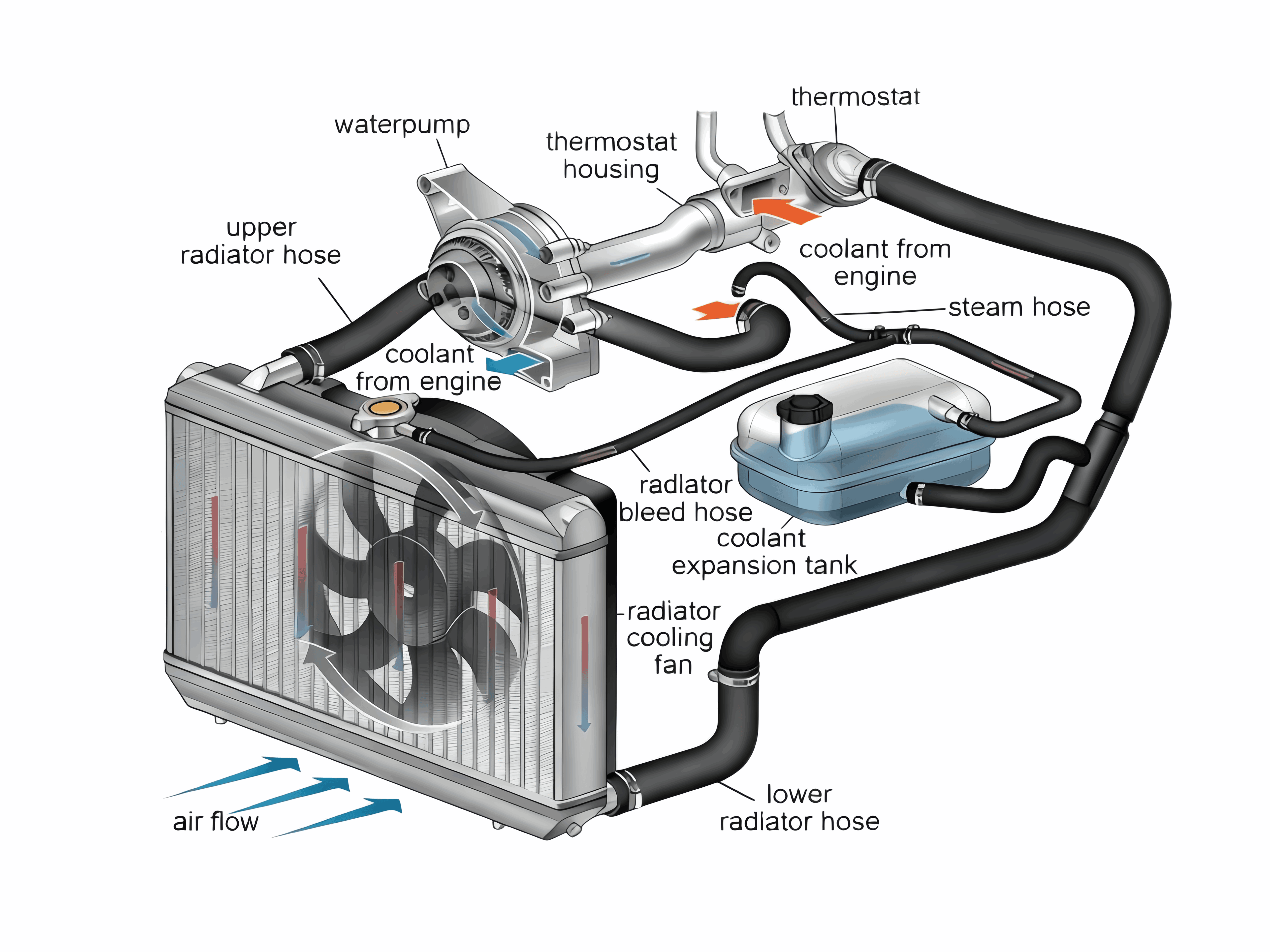
The cooling system of a car is a precise cycle project, mainly accomplished by the following core components:
Water Pump: Drives the coolant to circulate between the engine and the radiator
Thermostat: Intelligently regulates the coolant flow rate to ensure the engine warms up quickly and remains stable at the optimal temperature
Radiator: It dissipates heat through aluminum fins and a fan to lower the temperature of the coolant
Radiator Cooling Fan: Enhances air flow and assists in heat dissipation
Coolant Expansion Tank: It holds the excess coolant due to thermal expansion and contraction
Brief description of the workflow After absorbing heat from the engine, the coolant flows into the radiator through the water supply pipe. As it passes through the tiny heat dissipation fins, it is cooled by the fan and the natural wind during driving. Then, it is pumped back into the engine through the water supply pipe by the water pump, completing an efficient "cooling cycle".
Tip: The radiator not only protects the engine from overheating but also directly affects systems such as air conditioning cooling and transmission oil temperature control. It is one of the "hubs" of the vehicle's thermal management.